Victoria Sponge Cake is one of the most iconic and beloved cakes in British baking. Known for its light, fluffy sponge layers filled with sweet jam and whipped cream, this elegant dessert has been a favorite for generations. Whether you’re hosting afternoon tea, celebrating a special occasion, or simply craving a delicious homemade treat, a Victoria Sponge Cake is always a perfect choice.
In this comprehensive guide, you’ll learn everything about Victoria Sponge Cake, including its history, ingredients, step-by-step recipe, baking tips, variations, and storage methods.
What Is a Victoria Sponge Cake?
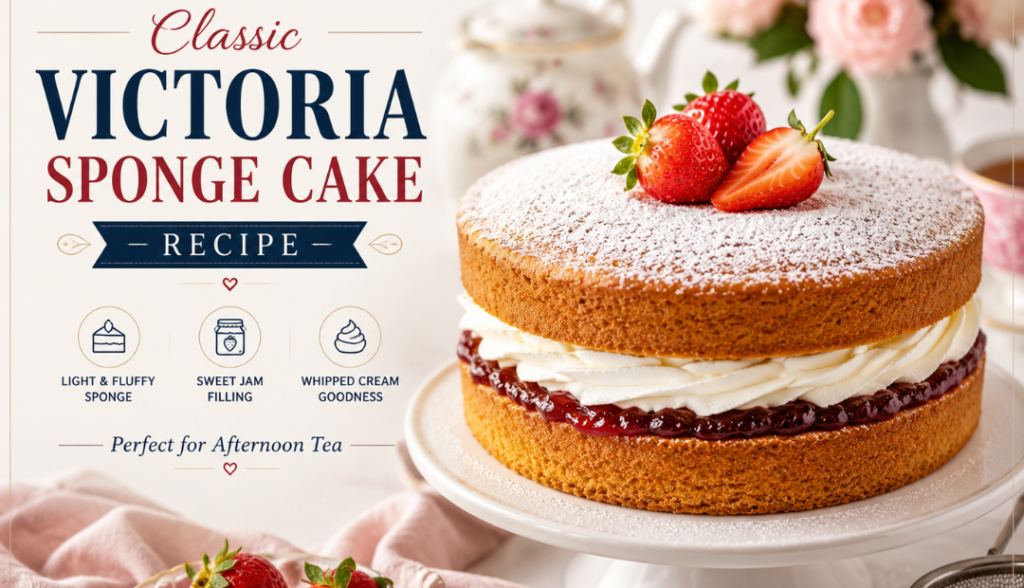
Victoria Sponge Cake, also known as Victoria Sandwich Cake, is a traditional British dessert consisting of two layers of vanilla sponge cake sandwiched together with jam and cream. The cake is typically dusted with powdered sugar and served alongside tea.
The cake was named after Queen Victoria, who reportedly enjoyed a slice with her afternoon tea.
Why You’ll Love This Victoria Sponge Cake Recipe
There are many reasons why this classic cake remains popular:
- Light and airy texture
- Simple ingredients
- Easy to make
- Perfect for afternoon tea
- Elegant presentation
- Customizable fillings
- Family-friendly dessert
Its simplicity is what makes it truly special.
Ingredients for Victoria Sponge Cake
For the Sponge Cake
- 1 cup (225g) unsalted butter, softened
- 1 cup (225g) caster sugar
- 4 large eggs
- 2 cups (225g) self-rising flour
- 1 teaspoon vanilla extract
- 2 tablespoons milk
For the Filling
- ½ cup strawberry or raspberry jam
- 1 cup heavy whipping cream
For Decoration
- Powdered sugar for dusting
Step-by-Step Victoria Sponge Cake Recipe
- Step 1: Prepare the Oven
Preheat your oven to 350°F (175°C).
Grease and line two 8-inch round cake pans with parchment paper. - Step 2: Cream Butter and Sugar
In a large bowl, beat the butter and sugar until pale and fluffy.
This process helps create the cake’s light texture. - Step 3: Add Eggs
Add eggs one at a time, mixing thoroughly after each addition.
Stir in the vanilla extract. - Step 4: Fold in Flour
Gradually fold the self-rising flour into the mixture.
Add milk and mix until smooth.
Avoid overmixing to maintain a soft sponge. - Step 5: Bake the Cakes
Divide the batter evenly between the prepared cake pans.
Bake for 20–25 minutes or until golden brown.
A toothpick inserted into the center should come out clean. - Step 6: Cool Completely
Allow the cakes to cool in the pans for 10 minutes before transferring them to a wire rack.
Let them cool completely before assembling. - Step 7: Prepare the Filling
Whip the heavy cream until soft peaks form.
Spread jam evenly over one sponge layer.
Top with whipped cream. - Step 8: Assemble the Cake
Place the second sponge layer on top.
Dust generously with powdered sugar.
Slice and serve.
The History of Victoria Sponge Cake
Victoria Sponge Cake dates back to the 19th century during the Victorian era. Afternoon tea became a popular social tradition, and Queen Victoria often enjoyed a slice of sponge cake with her tea.
As baking powder became more widely available, lighter sponge cakes became easier to create, leading to the popularity of the Victoria Sponge we know today.
Today, it remains a staple of British baking and is often featured in baking competitions and tea parties.
Tips for a Perfect Victoria Sponge Cake
Use Room Temperature Ingredients
Room-temperature butter and eggs blend more easily and create a smoother batter.
Don’t Overmix
Overmixing can make the sponge dense rather than light and fluffy.
Measure Ingredients Accurately
Precise measurements ensure consistent results.
This classic cake is ideal for:
- Afternoon tea parties
- Birthday celebrations
- Mother’s Day
- Family gatherings
- Weddings
- Holiday desserts
- Casual coffee breaks
Its elegant appearance makes it suitable for both formal and informal events.
Nutritional Benefits
While Victoria Sponge Cake is a dessert, some ingredients offer nutritional value:
Eggs
Provide protein and essential vitamins.
Dairy Products
Supply calcium and healthy fats.
Fruit Jam
Contains fruit-derived nutrients and natural sweetness.
As with any dessert, moderation is key.
Frequently Asked Questions
- Why Is It Called Victoria Sponge Cake?
It was named after Queen Victoria, who enjoyed eating sponge cake with afternoon tea. - Can I Make It Ahead of Time?
Yes. Bake the sponge layers a day ahead and assemble before serving. - What Jam Is Traditionally Used?
Strawberry or raspberry jam is most commonly used. - Can I Skip the Cream?
Absolutely. Traditional versions sometimes use only jam between the layers.
Victoria Sponge Cake is a timeless British classic that combines simplicity, elegance, and delicious flavor. With its soft sponge layers, sweet jam filling, and light whipped cream, it’s easy to understand why this cake has remained popular for over a century.
Whether you’re a beginner baker or an experienced cake enthusiast, this Victoria Sponge Cake recipe is sure to impress your family and guests. Bake one today and enjoy a slice of British baking history with your favorite cup of tea.