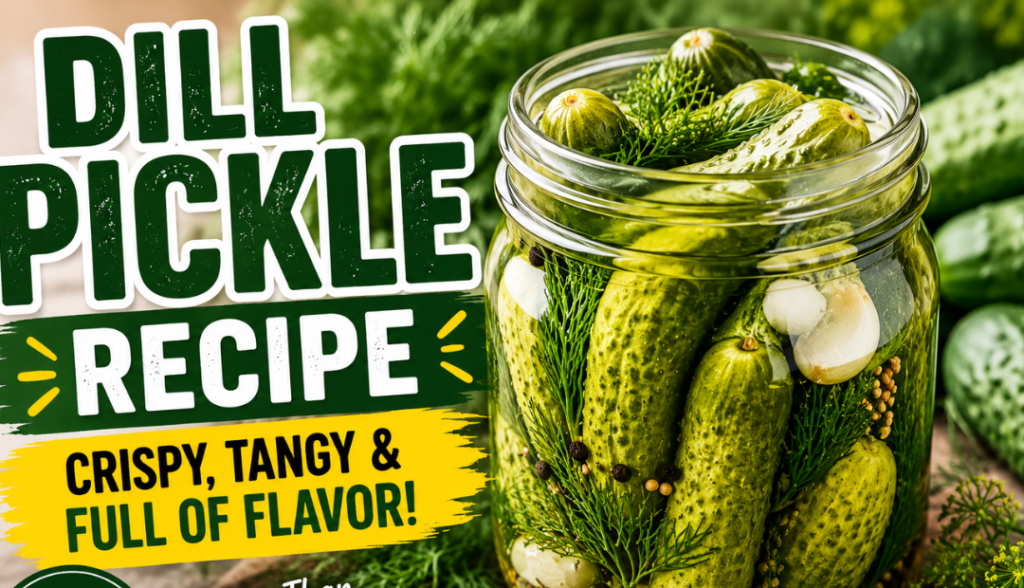
There’s nothing quite like the satisfying crunch of a homemade dill pickle. Bursting with fresh garlic, fragrant dill, and a perfectly balanced tangy brine, homemade dill pickles are far superior to most store-bought varieties. Whether you’re preserving cucumbers from your garden or simply craving a classic pickle recipe, this guide will help you make delicious dill pickles that stay crisp, flavorful, and fresh.
In this comprehensive recipe, we’ll walk through everything you need to know, from choosing the best cucumbers to creating the perfect brine and storing your pickles for long-lasting freshness.
Why You’ll Love This Dill Pickle Recipe
This homemade dill pickle recipe is:
- Easy to prepare
- Perfectly crunchy
- Packed with fresh dill and garlic flavor
- Great for beginners
- Ideal for canning or refrigerator storage
- Made with simple pantry ingredients
- Naturally vegan and gluten-free
Whether served alongside burgers, sandwiches, barbecue, or enjoyed straight from the jar, these pickles are always a crowd favorite.
What Are Dill Pickles?
Dill pickles are cucumbers preserved in a vinegar-based brine flavored with fresh dill, garlic, salt, and spices. Unlike sweet pickles, dill pickles have a savory, tangy flavor with a refreshing herbal taste from fresh dill.
Depending on the recipe, dill pickles can range from mildly tangy to boldly garlicky or spicy.
Ingredients
For the Pickles
- 2 pounds fresh pickling cucumbers
- 4 cups water
- 2 cups white distilled vinegar (5% acidity)
- ¼ cup pickling salt
- 6 garlic cloves, peeled
- 4 fresh dill heads (or several sprigs of fresh dill)
- 2 teaspoons mustard seeds
- 2 teaspoons black peppercorns
- 1 teaspoon coriander seeds
- ½ teaspoon red pepper flakes (optional)
- 2 bay leaves (optional)
Best Cucumbers for Pickles
Choosing the right cucumber is essential for crisp pickles.
The best varieties include:
- Kirby cucumbers
- Pickling cucumbers
- Boston Pickling cucumbers
- National Pickling cucumbers
Avoid large slicing cucumbers because they contain more water and seeds, resulting in softer pickles.
Kitchen Equipment
You’ll need:
- Large saucepan
- Mason jars
- Sterilized lids
- Measuring cups
- Sharp knife
- Funnel
- Tongs
- Water bath canner (optional)
How to Make Dill Pickles
Step 1: Wash the Cucumbers
Wash cucumbers thoroughly under cold water.
Trim about ⅛ inch from the blossom end of each cucumber. This helps maintain their crisp texture.
Leave small cucumbers whole or slice larger ones into spears or rounds.
Step 2: Prepare the Brine
In a saucepan, combine:
- Water
- Vinegar
- Pickling salt
Bring the mixture to a gentle boil.
Stir until the salt dissolves completely.
Remove from heat.
Step 3: Prepare the Jars
Place into each sterilized jar:
- Fresh dill
- Garlic cloves
- Mustard seeds
- Peppercorns
- Coriander seeds
- Bay leaf
- Optional red pepper flakes
Pack cucumbers tightly into the jars.
Step 4: Add the Brine
Pour the hot brine over the cucumbers.
Leave about ½ inch headspace.
Remove trapped air bubbles using a non-metal utensil.
Wipe jar rims clean before sealing.
Step 5: Seal the Jars
Secure lids until fingertip tight.
For refrigerator pickles, allow jars to cool before refrigerating.
For shelf-stable pickles, process jars in a boiling water bath for 10–15 minutes.
How Long Before They’re Ready?
Refrigerator Pickles
Best after:
- 24 hours: Light flavor
- 3 days: Better flavor
- 1 week: Excellent flavor
- 2 weeks: Maximum flavor
Canned Pickles
Allow jars to rest for at least two weeks before opening for the best taste.
Secrets to Perfectly Crunchy Dill Pickles
- Use Fresh Cucumbers
The fresher the cucumbers, the crunchier your pickles.
Pick or purchase cucumbers within 24 hours of making pickles. - Trim the Blossom End
This removes natural enzymes that soften cucumbers during storage. - Use Pickling Salt
Avoid iodized table salt because it can make the brine cloudy. - Don’t Overcook
Only heat the brine.
Never boil the cucumbers. - Use Cold Cucumbers
Cold cucumbers help maintain firmness during the pickling process.
Nutritional Information (Per Serving)
Approximate values:
- Calories: 10
- Carbohydrates: 2g
- Protein: 0g
- Fat: 0g
- Fiber: 1g
- Sodium: 280mg
Nutritional values may vary depending on serving size and ingredients used.
Expert Tips for the Best Homemade Dill Pickles
- Always use fresh, firm cucumbers.
- Sterilize jars thoroughly before filling.
- Let pickles mature for at least one week before enjoying.
- Store unopened jars in a cool, dark location.
- Experiment with spices like fennel seed, celery seed, or whole cloves for unique flavor profiles.
- Label each jar with the preparation date for easy tracking.
Making your own dill pickle recipe at home is surprisingly easy and incredibly rewarding. With crisp cucumbers, fragrant dill, garlic, and a perfectly seasoned brine, you’ll create pickles that are fresh, crunchy, and bursting with flavor. Whether you enjoy them as a snack, a sandwich topping, or a side dish, these homemade dill pickles are sure to become a staple in your kitchen.
If you loved this recipe, save it for later, share it with friends and family, and explore more homemade recipes to elevate your cooking.